

| CONGREGATION |
| |
| Pastor | ||
| Officers | ||
| KIDS CORNER | ||
| History | ||
| Links | ||
| Cemetery | ||
The Reformation - Luther is Excommunicated
On Reformation Day, October 31, we celebrate the beginning of the Protestant Reformation. This is the date in 1517 when Martin Luther nailed 95 theses on the door of Wittenberg Church in Germany opposing the Catholic church's practice of selling indulgences (tickets to heaven). The 2007 Reformation page can tell you more about this important event. This year, we'll look at what happened next.
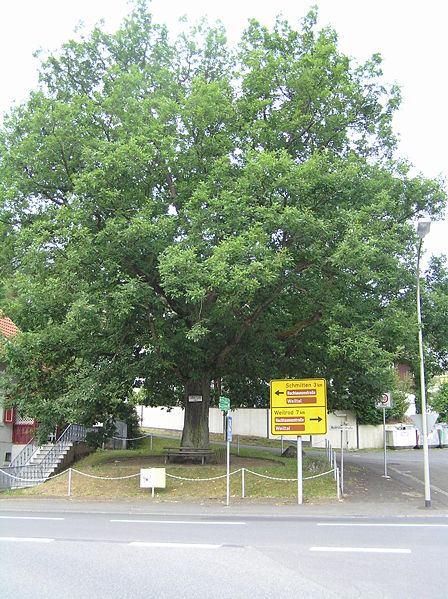
The "Luther Oak" in Wittenberg, Germany.
| After his 95 theses were published, Martin Luther continued to study the Bible and preach about his beliefs. He wrote many books and letters between 1518 and 1520. These widely published works challenged both the way the church did things and the idea that the Pope spoke directly for God. Pope Leo X told his most loyal and important scholars to go over all of Luther's writings carefully. This investigation, or inquisition, began in January of 1520. On June 15, 1520, the Pope wrote a letter (called a "papal bull") warning Luther that he must say his rebellious teachings were wrong. The scholars had identified 41 sentences that violated church teachings and the Pope wanted Luther to say each one was a mistake. The Pope went on to say that if Martin Luther didn't correct his thinking, he would be excommunicated in 60 days. Papal messengers read the Pope's message throughout Europe in the fall of 1520. The Pope wanted everyone to know that they shouldn't believe a word Martin Luther had to say. The Pope scared many people away from Martin Luther, but many other people continued to listen to Martin Luther's ideas about faith. Because the messenger carrying the Pope's letter to Luther stopped so much along the way, Luther didn't receive his official copy of the bull until late October. The bull made him very angry. It was titled "Exsurge Domine," and began Arise, O Lord, and judge your own cause. Remember your reproaches to those who are filled with foolishness all through the day. Listen to our prayers, for foxes have arisen seeking to destroy the vineyard whose winepress you alone have trod. When you were about to ascend to your Father, you committed the care, rule, and administration of the vineyard, an image of the triumphant church, to Peter, as the head and your vicar and his successors. The wild boar from the forest seeks to destroy it and every wild beast feeds upon it. According to the Pope, Martin Luther was a fox under the spell of a wild boar - and the wild boar was the devil! To show that he was not afraid, on December 10, 1520 Luther threw the papal bull, along with copies of books of papal teaching and church law, into a bonfire near a big oak tree. The place in Wittenberg where Luther's bonfire burned is still marked by the "Luther Oak." It is shown in the picture on the top left of this page. On January 3, 1521, Pope Leo X excommunicated Martin Luther. The Catholic Church would not change any of its theology or practice. To reform the Catholic Church, Martin Luther would have to build his principles into a new church, and that church, the Lutheran Church, would bear his name. |
* opens in a new window
| Martin Luther Rap |
| Reformation 2007 |
| Top of Page | Kids Corner Home | Last Page Viewed | |
Copyright 2022 Concordia Lutheran Church 6637 80th Avenue North Glyndon MN 56547 | |||
| Site Index | Search the Website | Contact Us | |