

| CONGREGATION |
| |
| Pastor | ||
| Officers | ||
| KIDS CORNER | ||
| History | ||
| Links | ||
| Cemetery | ||
The Protestant Reformation
Martin Luther did not want to create a new religion; he only wanted to get rid of all the bad ideas that the Catholic Church had and return the faith to its Biblical origins. After he was excommunicated, he realized that was not possible to fix the Catholic Church. Luther spent many years working to create a new church, and was joined in that effort by others in and around Wittenberg, including Philip Melancthon, who was mostly responsible for putting the Augsburg Confessions in writing, The Reformation had unintended results in Germany. Martin Luther's struggle was spiritual, but many people saw in his words support for their political goals. Luther spoke strongly against the power and corruption of the people who ran the church. The peasants saw the same kind of problems in the way their kings and princes did things. In 1524-25, peasants revolted against the nobility, believing that Luther would support them. When the German princes responded with cruelty and violence, the peasants were shocked to find out that Luther was not on their side. Many of them rejected Luther's view of faith as a result. What started as a religious conflict between the German princes and the Holy Roman Empire resulted in the "Thirty Years War." This destructive conflict spread from Germany into other parts of Europe and eventually involved the Ottoman Empire (centered in what is today Turkey). Martin Luther continued to write and preach until his death in 1546. |
October 2010 | ||||
|
|
|
|  |
* Opens in a new window
| Top of Page | Kids Corner Home | Last Page Viewed | |
Copyright 2022 Concordia Lutheran Church 6637 80th Avenue North Glyndon MN 56547 | |||
| Site Index | Search the Website | Contact Us | |

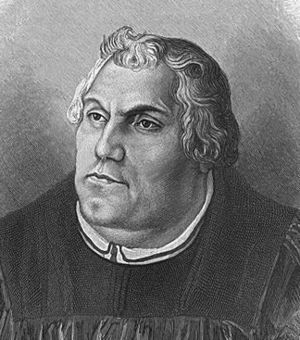 Martin Luther opened the doors for others to disagree with the way the Catholic Church worked. His view of faith was accepted in Northern Germany and the Scandinavian countries. His writings and the courage he showed in defending them made many other people think about their relationships with God and other people. All across Europe, important new leaders, like John Calvin in France and Ulrich Zwingli in Switzerland, offered new ideas about what the Bible really means, and new ways to worship God. Calvin introduced many new ideas, like predestination (which says that our fate was determined by God at the time of creation and cannot be altered by what we say or do in our own lives).