

| CONGREGATION |
| |
| Pastor | ||
| Officers | ||
| KIDS CORNER | ||
| History | ||
| Links | ||
| Cemetery | ||
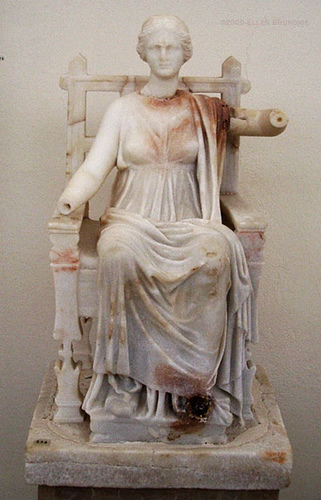 Greek goddess Rhea 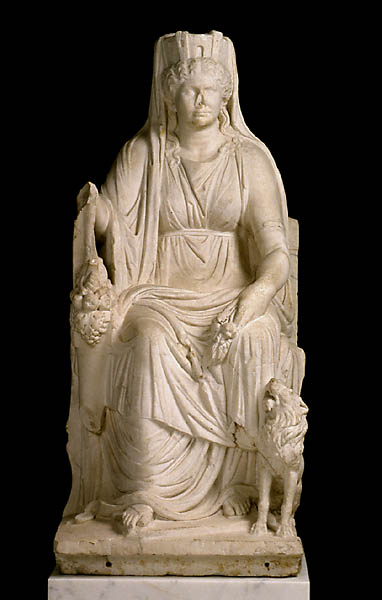 Statue of the goddess Cybele 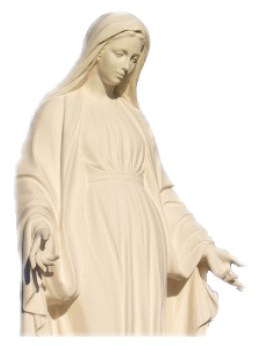 Mary, Mother of Jesus | The History of Mother's Day Second Sunday in May The history of Mother's Day goes back to the times of ancient Greeks, who held festivities to honor Rhea, the Mother of the gods. According to the stories in Greek mythology, Rhea was the wife of the Titan Kronos and Queen of Heaven. When her husband heard a prophecy that he would be deposed by one of his children, he took to swallowing each of them as soon as they were born. Rhea gave birth to her youngest child, Zeus, in secret and protected him by hiding him in a cave on the island of Crete guarded by shield-clashing Kouretes. Zeus grew to become the greatest and most powerful of all the Greek gods. Rhea was closely identified with the Roman mother-goddess Cybele, for whom festivals were held around the time of the spring equinox. Both of these mythological heroines were depicted as matronly women, usually wearing a turret crown, and attended by lions. The early Christians celebrated the Mother's Festival on the fourth Sunday of Lent to honor Mary, the mother of Jesus. In England in the 1500's a religious order stretched the holiday to include all mothers, and renamed it "Mothering Sunday." This observance continues as part of the Anglican Church calendar. However, the English colonists who settled in America discontinued that practice. In 1872, American Julia Ward Howe organized a day for mothers dedicated to peace. It is a landmark in the history of Mother's Day. She wrote the original Mother's Day Proclamation in 1870, as a call for peace and disarmament. An excerpt follows: Let mothers solemnly take counsel with each other as to the means In 1907, Anna M. Jarvis (1864-1948), a Philadelphia schoolteacher, began a movement to create a national Mother's Day. She solicited the help of hundreds of legislators and prominent businessmen. The first Mother's Day observance was a church service honoring her mother. Anna's hard work finally paid off in 1914, when President Woodrow Wilson proclaimed the second Sunday in May as a national holiday in honor of mothers.
|
| Top of Page | Kids Corner Home | Last Page Viewed | |
Copyright 2022 Concordia Lutheran Church 6637 80th Avenue North Glyndon MN 56547 | |||
| Site Index | Search the Website | Contact Us | |